James Hardie Site Prep & Utilities: The Santa Clarita Owner’s Guide
If you’re searching for James Hardie site prep and utilities support in Santa Clarita, the short answer is this: Sutton ADU Santa Clarita stocks the flashing, moisture barriers, trim, and utility rough-in materials required for a clean James Hardie installation, and our typical site prep package for a Hardie-clad ADU or addition runs $3,800 – $8,200 depending on lot conditions, existing utility access, and the amount of regrading or trenching involved. Most Santa Clarita homeowners discover they need this work after a failed inspection catch, a water intrusion issue at the base of their siding, or when their existing underground utility lines turn out to be nowhere near where the old plans said they were. We’re an independent contractor, not a James Hardie affiliate, so our job is to tell you what’s actually needed on your lot, not to sell you a product line.
Key Takeaways:
- James Hardie site prep in Santa Clarita typically costs $3,800 – $8,200 installed, including utility trenching, grading, drainage, and Hardie-specific flashing.
- The most common point of failure is improper gap clearance between Hardie planks and grade level, which leads to wicking and deterioration within 3 – 5 years.
- We stock Hardie-compatible flashing, weep screed, and moisture barrier materials on our trucks, so most site prep corrections don’t require a second visit.
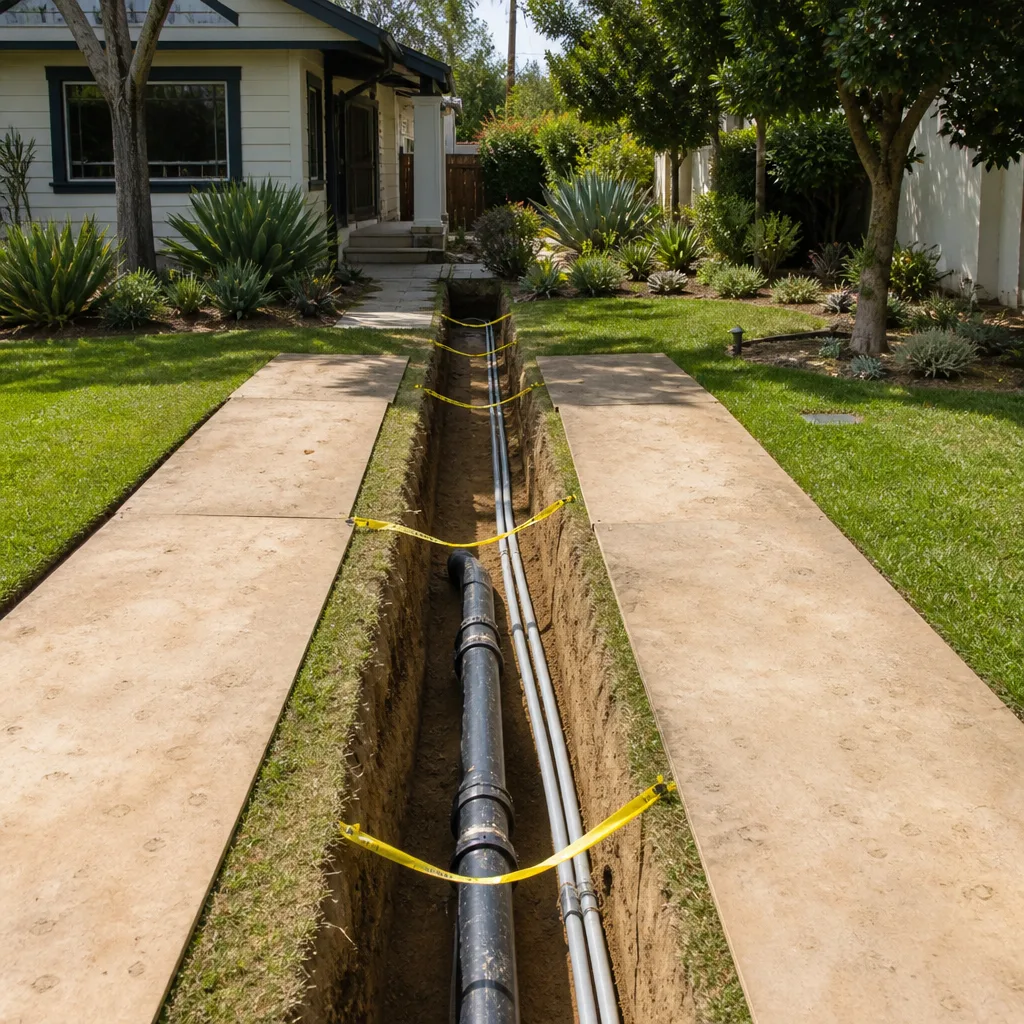
- Underground utility locating and trenching is not a DIY job in Santa Clarita, where soil varies from sandy alluvium to dense clay and buried lines are rarely where homeowners expect them.
Which James Hardie Models This Applies To
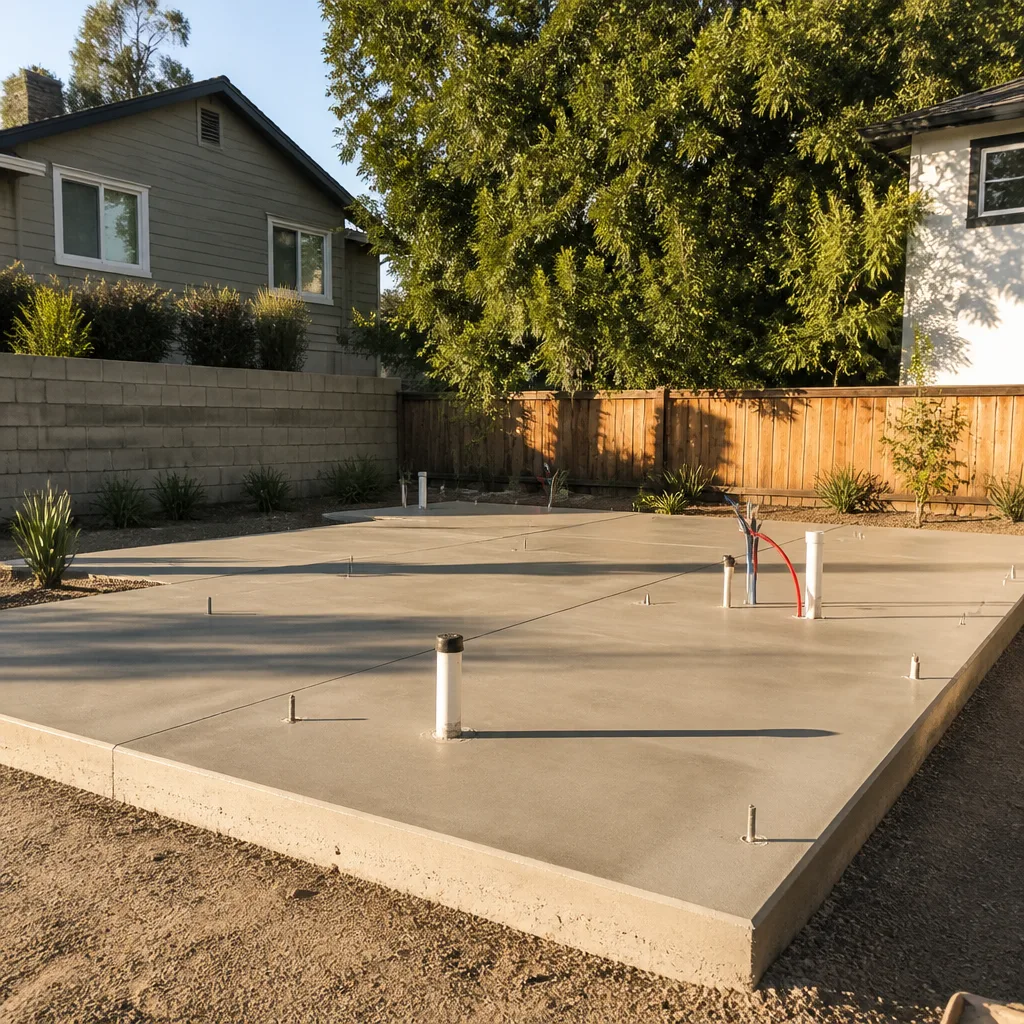
HardiePlank lap siding, HardiePanel vertical siding, HardieShingle, and HardieTrim all share the same site prep requirements at the base of the wall assembly, but the utility side of the equation doesn’t change much across product lines. What changes is the clearance spec. HardiePlank lap siding requires a minimum 6-inch gap between the bottom edge of the siding and the finished grade on most residential installations, while HardiePanel can sit slightly lower at 4 inches in some California jurisdictions. In Santa Clarita, the city’s building department typically defers to the manufacturer’s installation guide, which means a site prep failure caught at inspection is almost always a gap clearance or flashing issue, not a siding product failure.
When it comes to matching the right site prep materials to your specific James Hardie installation, the label on your siding won’t help you. What matters is the wall assembly beneath it. You need to know whether you have a rainscreen gap, what type of weather-resistive barrier was used, and whether your weep screed and flashing are the correct profile for the Hardie product above them. For most homeowners, this means pulling a section of trim or looking at the original installation photos. If you don’t have either, we can identify what’s behind your siding during the estimate visit. For the utilities side, the relevant question is whether your water, sewer, or electrical runs pass under any area where you’re adding a new structure or replacing siding at grade.
On the OEM-versus-aftermarket question: James Hardie doesn’t manufacture flashing, weep screed, or moisture barriers. They publish installation specs, and third-party manufacturers like Tamlyn, ClarkDietrich, and CertainTeed make components that meet or exceed those specs. We stock Tamlyn flashing profiles specifically because they’re designed around Hardie’s thickness tolerances, and we’ve found they hold up better in Santa Clarita’s hot, dry summers than uncoated aluminum alternatives that warp under direct sun exposure.
Signs Your James Hardie Site Prep & Utilities Is Failing
- Efflorescence or white chalky residue at the bottom edge of your Hardie siding. This means water is wicking up from the ground through capillary action, which almost always traces back to insufficient gap clearance between the siding and the grade. In Santa Clarita’s clay-heavy soil, this is the most common site prep failure we see, especially on older additions where the original grade has drifted upward over years of landscaping.
- Soft spots or bubbling paint on the lower 12 inches of your siding. The moisture barrier behind the siding has failed or was never properly lapped at the base of the wall. Water is getting behind the siding and sitting against the sheathing, which leads to rot and termite activity sooner than you’d think in our climate.
- Gaps between the bottom of your siding and the soil that are less than 4 inches, or siding that touches the dirt directly. This is the most obvious visual sign, and it’s also the one that most often gets flagged during a resale inspection or a refinance appraisal in Santa Clarita.
- Water pooling near the foundation after rain, or gutters that discharge directly against the base of your Hardie-clad wall. The site drainage wasn’t sloped away from the structure, which means every rainy season is actively working against your siding’s lifespan. In Canyon Country and Saugus, where winter rains hit harder than the rest of the valley, this is a recurring issue we address on a surprising number of pre-2000 additions.
- Unexplained cracking in your Hardie planks near window or door penetrations. This often signals differential settlement below the slab or foundation edge, which shifts the framing and puts stress on the siding. It may not be a siding problem at all. It’s a site prep problem that was ignored or not caught during the original build.
Replacement Cost & What’s Included
For a typical Santa Clarita lot, correcting site prep issues around a James Hardie-clad structure runs $3,800 – $8,200. The biggest swing factor is utility work. If your project requires trenching to move or repair a water line, sewer lateral, or electrical conduit, that adds $1,500 – $4,000 on its own depending on depth, soil conditions, and whether the city requires a separate inspection. Regrading and drainage correction typically runs $900 – $2,200, while flashing and moisture barrier replacement at the base of the wall runs $1,400 – $2,800 for most single-story additions. Every job gets a written line-item price before we start, so you’ll know exactly what’s being charged for materials, labor, and any permit-related inspection fees. There are no change orders unless you ask us to do additional work, and the 365-Day Done Right Promise covers every element of the site prep and utility work we perform.
DIY or Call Us?
You can safely check the gap clearance between your siding and the grade with a tape measure. You can look for pooling water, visible cracking, and efflorescence. What you should not attempt to do yourself is any work involving underground utility lines, electrical conduit, or gas piping. In Santa Clarita, hitting an unmarked line is not just expensive, it’s dangerous. Digging without a proper utility locate is the single most preventable disaster we see on ADU and addition projects. If you’re dealing with a site prep issue that’s purely cosmetic, like a small gap that needs re-flashing, a capable homeowner can sometimes handle it with the right materials and a clear understanding of Hardie’s installation specs. But if you’re seeing signs of moisture behind the siding, or if your utility lines are involved in any way, call us at (661) 430-0429. We’ll walk the site with you, explain what’s actually going on, and give you a written price before any work begins. Miles Hartwell has been looking at Santa Clarita lots long enough to know that a straight answer now saves a painful surprise later.
FAQs
Properly installed site prep including grading, drainage, and flashing should last 20 – 30 years in Santa Clarita’s climate, but the failure point is usually the grade. Landscaping, soil movement, and erosion gradually reduce the gap clearance between your siding and the ground, and that clearance is the difference between a 30-year siding lifespan and a 10-year one. Call (661) 430-0429 if your gap has shrunk below 4 inches and we’ll give you an honest read on what needs correcting.
If the moisture problem is caught early, the site prep can usually be corrected without replacing the siding. The flashing gets replaced, the grade gets re-sloped, and the wall assembly gets dried out. If the siding itself has absorbed water and begun to deteriorate at the bottom edge, those bottom courses may need replacement. Call us at (661) 430-0429 for an assessment that tells you which scenario you’re in before you spend a dollar.
Most site prep corrections on a Hardie-clad structure in Santa Clarita take 2 – 4 days from start to finish, including any required city inspections. Utility trenching work adds 1 – 2 days if the city requires a separate inspection before backfill. We’ll give you a written timeline as part of your estimate so you know exactly what to expect.
We stock Tamlyn flashing profiles, weep screed, and moisture barrier materials on our trucks specifically because they’re the most common correction on Hardie-clad structures in Santa Clarita. If your project requires a specialty profile or a different product line, we can typically source it within 2 – 3 business days. Call (661) 430-0429 and we’ll confirm what’s on the truck before we schedule your visit.
Written by Miles Hartwell, Owner, Sutton ADU Santa Clarita at Sutton ADU Santa Clarita, serving Santa Clarita and nearby areas.