Last updated October 15, 2026
How to Hire a ADU Contractor in Santa Clarita: A Step-by-Step Guide
The California Contractors State License Board reports that ADU-related complaints rose 34% between 2021 and 2023, and the most common grievance wasn’t shoddy framing or a cracked slab. It was contractors who took a deposit and vanished before a permit was ever pulled. In Santa Clarita, where the city processed more than 400 ADU applications in a single recent year, that pattern hits close to home. This guide walks you through a verification-first hiring sequence, step by step, so you know exactly what to check, what to ask, and what to walk away from before you sign anything.
Quick Answer
Hiring an ADU contractor in Santa Clarita comes down to seven verification steps: confirm the CSLB license is active and clean, require a written site-visit estimate, demand crew identity and background disclosure in writing, lock payment milestones to permit sign-offs, confirm Santa Clarita jurisdiction experience, check prefab or modular brand fluency if you’re going that route, and read the contract’s change-order and lien-release language before you sign. Do these in order and you’ll filter out most of the contractors who cause the horror stories.
Table of Contents
- Step 1: Verify the CSLB License Before You Say Another Word
- Step 2: Demand a Site Visit Estimate, Not a Bait Price
- Step 3: Vet Who Actually Shows Up to Build
- Step 4: Lock Payment Milestones to Permit Sign-Offs
- Step 5: Confirm Santa Clarita Jurisdiction Experience
- Step 6: Ask About Prefab and Modular ADU Brand Fluency
- Step 7: Read the Contract Like a Closing Attorney
- Common Mistakes to Avoid
- When to Call a Professional
- Frequently Asked Questions
- The Bottom Line
Step 1: Verify the CSLB License Before You Say Another Word
Every legitimate ADU contractor in California carries a CSLB license, and every homeowner should check it the same day they get the first phone number. The process takes four minutes and eliminates the single largest category of ADU scam: the unlicensed operator who collects a deposit and disappears.
Here’s the exact sequence we recommend to every Santa Clarita homeowner:
- Go to the CSLB’s license lookup page (cslb.ca.gov) and enter the contractor’s name or license number.
- Confirm the license type. An ADU build requires a General B license, or a C-5 (framing), C-6 (cabinetry and finish), or C-8 (concrete) specialty license depending on scope. A B license is the standard for full ADU construction.
- Check the status field. It must say “Active.” Not “Inactive,” not “Suspended,” not “Expired.”
- Look at the bond and insurance fields. The bond should show as current, and workers’ compensation coverage should be listed if the contractor has employees.
- Scroll for any disclosures, arbitration records, or formal complaints. A clean record shows none, or shows resolved items clearly explained.
One Santa Clarita-specific note: the city’s Building and Safety division cross-references CSLB status when permits are pulled. If your contractor’s license lapses mid-project, your permit can stall. We’ve seen it happen on ADU projects in Valencia and Saugus more than once.
Step 2: Demand a Site Visit Estimate, Not a Bait Price
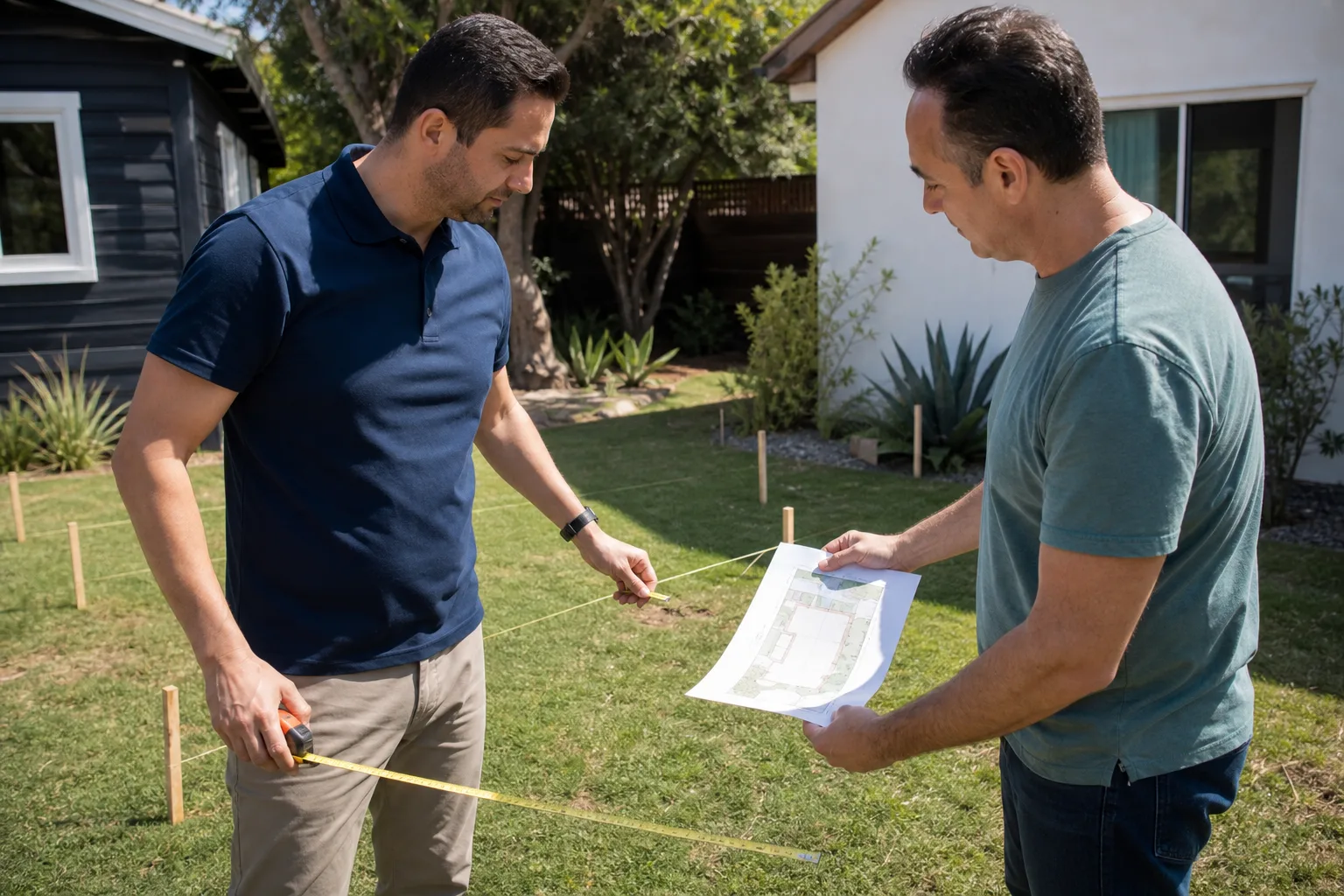
A free phone estimate without a physical site visit is worthless for ADU pricing. Your lot’s slope, soil type, utility access points, existing easements, and setback distances all move the number. Any contractor who quotes a firm price over the phone before seeing your property is giving you a bait number designed to get a signature, not a real price.
In Santa Clarita, this matters even more than in flatter parts of Los Angeles County. The city spans everything from flat Valencia lots to hillside parcels in Canyon Country with significant grade changes. A 400-square-foot detached ADU on a flat lot might run $180,000 to $260,000 in our market, while the same floor plan on a sloped Saugus lot with retaining wall work and deep footings can push past $320,000 before finishes. See our ADU Cost Breakdown: The Santa Clarita Homeowner’s Reference for 2026 for a deeper look at what drives these numbers.
Here’s what a real site-visit estimate includes:
- A physical walk of the property, not a satellite-photo review
- The contractor checking where utilities stub out and where the panel sits
- A conversation about setbacks and whether your lot conforms to Santa Clarita’s ADU ordinance
- A written line-item breakdown you can read, not a single number in a text message
- The contractor’s note on whether a soils report or structural review will be required
Ask one question to separate real estimates from bait prices: “Will this price still hold after you see the property and review the soils?” If the answer hedges, walk.
Step 3: Vet Who Actually Shows Up to Build
The contractor you hire is rarely the person who swings the hammer every day. Most ADU projects in Santa Clarita involve a lead contractor, subcontractors for framing, electrical, plumbing, and drywall, and sometimes a rotation of day laborers. California law requires contractors to disclose, upon request, the names of subcontractors working on your project. Few homeowners ever ask.
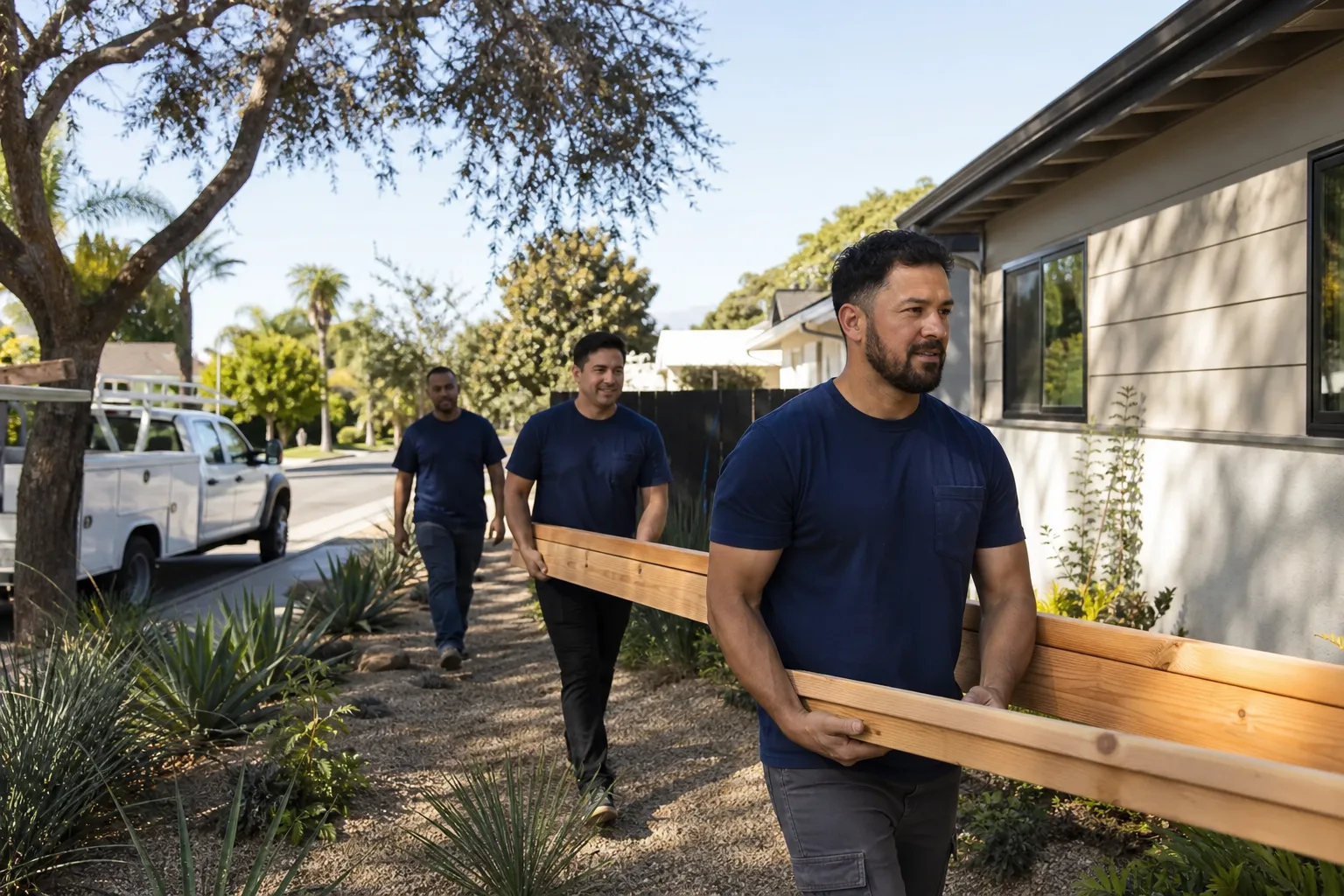
This is the step most hiring guides skip, and it’s the step our clients tell us matters most. You’re not just hiring a company. You’re letting people onto your property, often while you’re at work or running errands. You deserve to know their names before they arrive.
We built the Threshold Standard around this exact gap. Every person who arrives on a Sutton ADU Santa Clarita project is background-checked and identity-verified. Their name and photo are sent to you before the visit. They arrive in a clean, marked uniform and show a photo ID badge at your door. Every time. Not sometimes. That’s the difference between a contractor’s verbal assurance and a written operating standard.
Here’s what to demand from any contractor, in writing, before you sign:
- A list of all subcontractors who will work on your property, with their license numbers
- Confirmation that every worker is background-checked and identity-verified
- The name and photo of the project lead who will be on site each day
- A written policy on what happens if an unlisted worker shows up unannounced
If a contractor balks at any of these, that’s information. Use it.
Step 4: Lock Payment Milestones to Permit Sign-Offs
The most common ADU payment scheme we hear about in Santa Clarita goes like this: contractor asks for 40% upfront, then 30% at “rough framing,” then the rest at “substantial completion.” The homeowner pays the first two installments, the crew stops showing up, and the permit was never pulled because the contractor was never planning to pull it.
Here’s the rule: never pay a milestone that isn’t tied to a verifiable, government-documented event.
Your contract should anchor payment milestones to these triggers:
- Deposit (typically 10-15%) released only after you’ve received a copy of the submitted permit application
- Second payment released only after the city of Santa Clarita or LA County issues the actual permit and construction begins
- Third payment released after foundation inspection passes
- Fourth payment released after framing inspection passes
- Fifth payment released after all mechanical, electrical, and plumbing inspections pass
- Final payment released only after final inspection passes and you receive signed lien releases from every subcontractor
A legitimate contractor won’t blink at this structure. A contractor who needs 40% before the permit is even filed is telling you something about their cash flow and their intentions.
Step 5: Confirm Santa Clarita Jurisdiction Experience
Santa Clarita is a city, not an unincorporated county area, but it sits inside Los Angeles County, and the ADU permitting path depends on where your lot falls. For a full overview of the process, read our guide to ADU Permits, Codes & Inspections in CA: What You Need to Know. Some parcels in Santa Clarita’s sphere of influence are actually unincorporated LA County land, with different plan-check reviewers, different timelines, and different interpretations of the state’s ADU mandates.
A contractor who doesn’t ask for your parcel’s jurisdiction status in the first conversation doesn’t know the market. Ask these three questions:
- “Is my lot under city of Santa Clarita Building and Safety or LA County Building and Safety?”
- “Which plan checker do you typically work with for this jurisdiction?”
- “How many ADUs have you permitted in Santa Clarita in the last two years?”
A contractor who can name the plan checker and describe recent permit experiences is worth a second conversation. A contractor who says “it’s all the same process” is not. It isn’t. The city of Santa Clarita has specific ADU standards, including maximum sizes, setback reductions, and parking requirements that differ from unincorporated LA County. A 1200-square-foot ADU might be approvable under county rules and not under city rules, or vice versa.
We run every new ADU engagement in Santa Clarita through a jurisdiction check before we quote. It takes twenty minutes and prevents six months of permit limbo.
Step 6: Ask About Prefab and Modular ADU Brand Fluency
Factory-built ADUs now account for a meaningful share of new units in California, and Santa Clarita homeowners are asking about them more often. Brands like Abodu, Cover, Dvele, and Mighty Buildings each have different panel systems, different foundation requirements, different price points, and different lead times. A contractor who claims to “do prefab” without naming specific brands and explaining what each one requires hasn’t actually built one.
Here’s a simple fluency test. Ask your contractor:
- “What’s the difference between an Abodu unit and a Cover unit in terms of foundation and delivery?”
- “Which factory-built brands have you installed in Santa Clarita, and which would you recommend for a sloped lot in Canyon Country?”
- “Does Mighty Buildings’ panel system require different structural engineering than a conventional site-built ADU?”
A qualified ADU builder can answer all three in a couple of minutes. If you get a blank look, you’re talking to a conventional home builder who’s trying to ride the ADU wave without the product knowledge.
Sutton ADU Santa Clarita has experience with Abodu, Cover, Dvele, and Mighty Buildings systems, and we can walk you through which factory-built approach fits your lot and budget. That fluency matters because prefab pricing works differently: the factory cost is fixed, but site work, foundation, utility connections, and crane access vary wildly by property. A contractor who can’t explain that split can’t give you a real number.
Step 7: Read the Contract Like a Closing Attorney
By this step, you’ve verified the license, confirmed the estimate is real, vetted the crew, locked payment milestones to permits, confirmed jurisdiction experience, and tested prefab fluency. Now you read the contract. Not skim it. Read it.
Three clauses matter more than any others in an ADU contract:
- Lien releases. Every subcontractor who works on your property can file a mechanic’s lien against your home if they’re not paid, even if you paid the general contractor. Your contract must require the general contractor to provide conditional and unconditional lien releases from every sub before you release each payment. No lien release clause, no signature.
- Change-order process. Legitimate change orders happen on most ADU projects, but they should never be verbal. The contract must state that all changes are documented in writing, priced in writing, and require your signature before work proceeds. A contractor who says “we’ll handle it and figure it out later” is writing you a blank check.
- Warranty language. California requires a one-year warranty on new construction workmanship, but many ADU contracts bury vague language that limits what’s actually covered. Your contract should state exactly what’s covered, how long, and what the process is for filing a claim. The 365-Day Done Right Promise that Sutton ADU Santa Clarita writes into every project states plainly: if the work isn’t right within one full calendar year of completion, we make it right. No arbitration first. No haggling. No fee. That’s the standard you should hold every contractor to.
If any of these three clauses is missing, vague, or one-sided, negotiate before you sign. A contractor who won’t put lien releases, written change orders, and warranty terms in writing isn’t a contractor you want on your property.
Common Mistakes to Avoid
- Hiring without a CSLB check. Four minutes on cslb.ca.gov would have caught most of the ADU deposit scams in California. If you skip this, you’re gambling.
- Accepting a phone quote as a real price. No one prices a Santa Clarita hillside ADU over the phone. If they do, the price will change once they see the lot, or they’ll cut corners to hold the number.
- Paying a large deposit before the permit is filed. Your deposit should be tied to a delivered permit application. A contractor who needs 40% before filing is using your money to finish someone else’s job.
- Not asking who shows up. The contractor you interview might never touch your project after signing. Get crew names, get background verification, get it in writing.
- Ignoring the jurisdiction split in Santa Clarita. City of Santa Clarita and LA County have different ADU rules. A contractor who doesn’t know which one governs your lot doesn’t know your project.
- Skipping the lien release clause. You can pay your contractor in full and still get a lien filed against your home by an unpaid sub. Lien releases are not optional.
- Signing a contract without warranty terms. California’s one-year workmanship warranty is the floor, not the ceiling. Demand written terms that state what’s covered and how disputes are handled.
When to Call a Professional
If you’ve made it through this guide and you’re still not sure whether a contractor is legitimate, stop guessing and ask for help or explore more guides & resources on our blog. A professional ADU builder will answer every one of these verification questions without hesitation, and will volunteer the documentation before you ask for it. That’s the tell. If you’re evaluating contractors in Santa Clarita and want a free estimate from a team that ties every payment to a permit sign-off, verifies every crew member before they arrive under the Threshold Standard, and backs the work with the 365-Day Done Right Promise, call Sutton ADU Santa Clarita at (661) 430-0429.
We’ve been building in Santa Clarita since 2006, and we’ll walk you through the entire process, from jurisdiction check to final inspection, before you commit to anything. Learn more about our ADU building services in Santa Clarita, or explore our home addition contractor options if you’re considering a larger scope.
Frequently Asked Questions
A detached ADU in Santa Clarita typically costs $180,000 to $320,000 for the full build, including site work, foundation, utilities, and finishes, depending on lot conditions and size. A garage conversion runs $80,000 to $150,000. Call (661) 430-0429 for a written line-item estimate on your specific property.
Permitting through the city of Santa Clarita typically takes 4 to 8 weeks once plans are submitted, and construction runs 4 to 8 months depending on scope, site conditions, and whether you use site-built or factory-built panels. Prefab ADUs from brands like Abodu and Cover can shorten the on-site construction window significantly once the foundation is ready.
Most hillside lots in Santa Clarita, particularly in Canyon Country and Saugus, require a soils report before ADU permits are issued. Flat lots in Valencia may not, but the city’s plan checker will make the final call. Any contractor who quotes a firm price before confirming the soils requirement is guessing.
A B license (General Building Contractor) allows a contractor to manage and perform full ADU construction, including framing, foundation, and finish work. A C license covers specific trades only, like C-5 for framing or C-8 for concrete. For a full ADU build, you want a B-licensed general contractor.
No. Every subcontractor performing work over $500 on your ADU must hold their own CSLB license in the appropriate trade. You have the right under California law to request a list of all subcontractors and their license numbers before work begins. Call (661) 430-0429 to talk through a contract that protects you.
Expect to pay 10-15% as an initial deposit, released only after you’ve received a copy of the submitted permit application. Any contractor asking for more than 15% before a permit is filed is creating a cash-flow risk for you. The balance should be tied to inspection pass milestones.
Yes, factory-built ADUs from Abodu, Cover, Dvele, and Mighty Buildings are permitted in Santa Clarita, subject to the same setback, size, and parking rules as site-built units. The key variable is your lot’s access for crane delivery and the foundation system each brand requires. Talk to us about room addition and prefab options if you’re weighing a factory-built unit against a site-built addition.
The Bottom Line
Hiring an ADU contractor in Santa Clarita is a verification process, not a trust exercise. Verify the CSLB license. Require a site-visit estimate with a written line-item breakdown. Demand crew identity verification before anyone steps on your property. Tie every payment to a permit or inspection sign-off. Confirm your contractor knows the Santa Clarita and LA County jurisdiction split. Test their prefab fluency if you’re considering a factory-built unit. Read the lien release, change-order, and warranty clauses before you sign. Do those seven things in order and you’ll filter out the contractors who cause most ADU horror stories. If you’d like help from a team that does all seven by default, Sutton ADU Santa Clarita serves the entire Santa Clarita Valley. Call (661) 430-0429 for a free estimate.
Written by Miles Hartwell, Owner at Sutton ADU Santa Clarita, serving Santa Clarita since 2006.