Last updated October 15, 2026
DIY vs Professional ADU: The Santa Clarita Homeowner’s Decision Guide
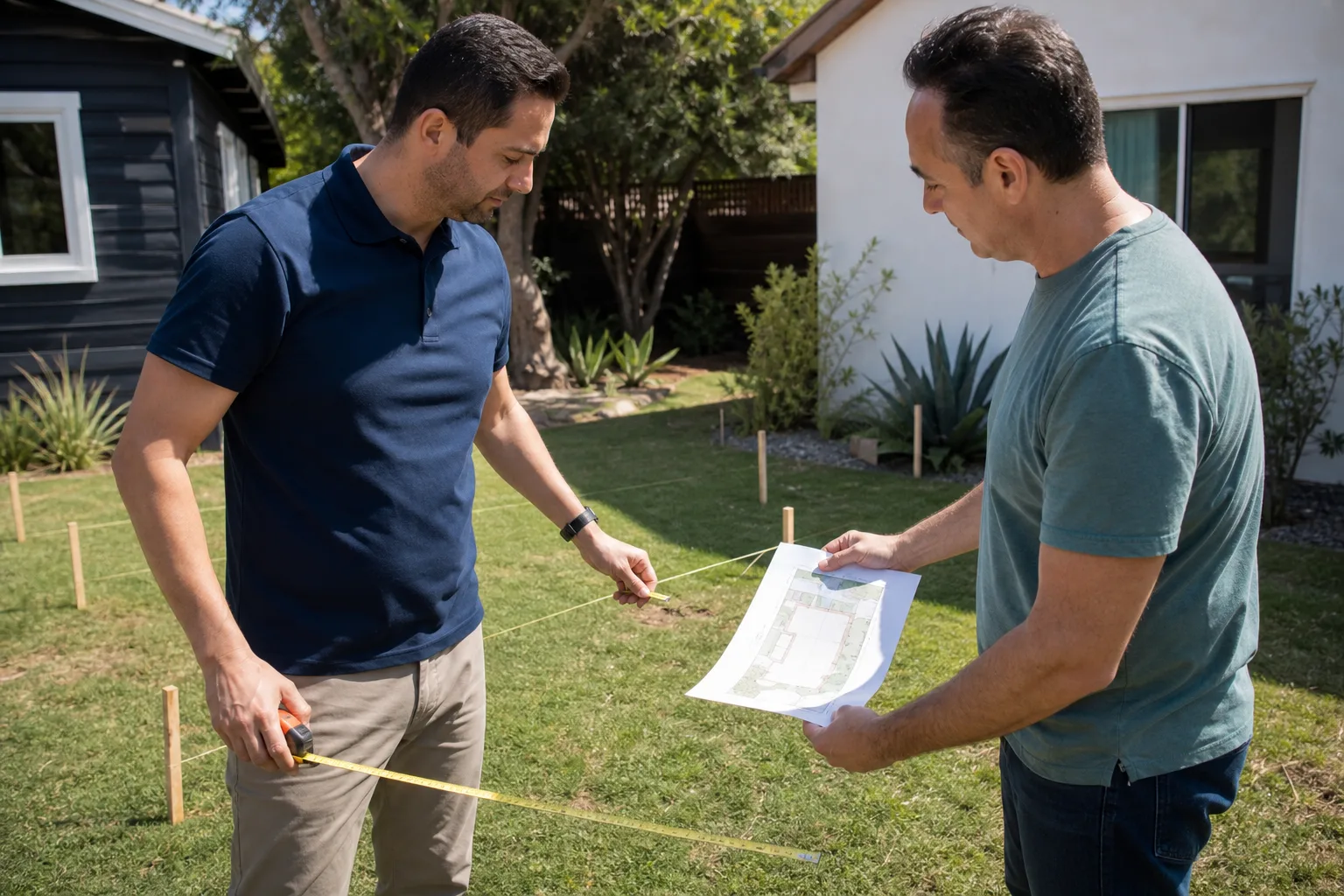
California’s owner-builder permit lets you act as your own general contractor on a project you intend to live in, which sounds like a straightforward way to save the 15 to 20 percent markup a general contractor charges. What most Santa Clarita homeowners don’t realize until it’s too late is that the owner-builder path makes you personally liable for construction defects for ten full years, requires you to disclose that fact to any future buyer, and shifts every insurance and permitting risk onto your shoulders. This guide walks through the decision honestly: what you can legally do yourself, what you shouldn’t touch regardless of skill level, what the hidden costs actually look like in Santa Clarita, and how to decide which path fits your situation. For more guides & resources on ADU projects, see our blog.
Quick Answer
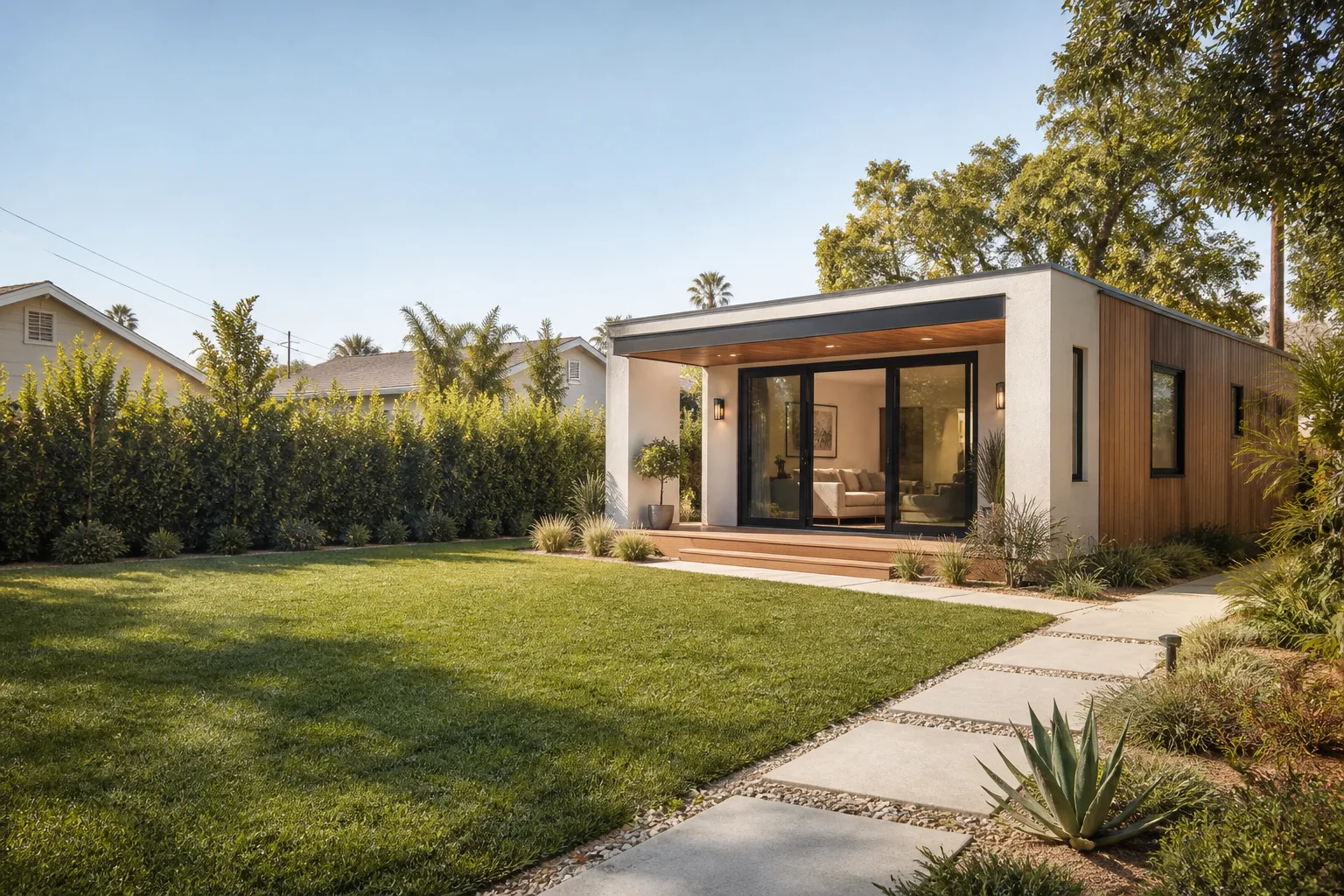
For most Santa Clarita homeowners, a professional ADU builder is the right call because the owner-builder permit carries a ten-year personal liability disclosure and the savings rarely survive contact with permit corrections, re-inspection fees, and insurance gaps. DIY makes genuine sense only for a narrow slice of owners: those with real construction trade experience, strong project management skills, and the time to run a multi-month build. The honest math is that a detached ADU in Santa Clarita runs $180,000 to $320,000 through a licensed builder, while an owner-builder project typically lands 10 to 18 percent lower before the risk costs get added back in.
Table of Contents
- The California Owner-Builder Permit: What You’re Actually Signing
- What You Can Legally Do Yourself (and What You Cannot)
- The True Cost Comparison: Why DIY Savings Are Smaller Than They Look
- The Crew-Vetting Problem DIY Doesn’t Solve
- The Santa Clarita Decision Matrix: Four Homeowner Profiles
- Santa Clarita-Specific Factors: Soils, Setbacks, and Seismic Rules
- The Prefab Middle Path: Factory-Built ADUs in Santa Clarita
- Insurance, Title, and Resale: The Risks That Outlast the Build
The California Owner-Builder Permit: What You’re Actually Signing
California Business and Professions Code Section 7044 allows a homeowner to act as their own contractor on a project they intend to occupy, provided they do the work themselves or hire licensed subcontractors. That sounds reasonable. The catch is what the law requires you to acknowledge in writing before the permit is issued: you become legally responsible for any construction defect for ten years, and you must disclose your owner-builder status to any buyer if you sell within that window.
In practice, that disclosure creates a measurable drag on resale. A buyer with a conventional mortgage will face lender scrutiny, because most lenders require either a completed inspection by a licensed contractor or a retrofit of any unpermitted or owner-built work before they’ll fund. In Santa Clarita, where the median home price sits above $750,000 and buyers are already stretched, an owner-builder ADU can knock a sale sideways. We’ve fielded calls from homeowners in Valencia and Saugus who discovered this only when their listing agent flagged the disclosure during escrow. By then, the savings from acting as owner-builder had evaporated into a price concession or a rushed repair bill.
The ten-year liability is not theoretical. If a future owner discovers a foundation issue, a roof leak traced to improper flashing, or an electrical fault, and the work falls within the statutory window, the liability points at you personally. A licensed general contractor carries the same liability, but they also carry insurance and a bond to back it. You carry your homeowner’s policy, which has exclusions for construction defects on work you performed or directed. That’s the part most homeowners sign without reading.
What You Can Legally Do Yourself (and What You Cannot)
The honest answer is that California law is more permissive than most people assume, but the City of Santa Clarita’s permitting process layers its own requirements on top. Here’s the realistic breakdown.
What a skilled homeowner can do on a permitted ADU:
- Finish carpentry and trim work – baseboards, casing, and interior doors are within reach for a competent DIYer and rarely trigger inspection failures.
- Interior painting – no permit implications, no code complexity, and you’ll save a few thousand dollars.
- Tile and flooring installation – with one caveat: the subfloor and waterproofing beneath a bathroom tile job will be inspected, and that’s where DIY work fails most often.
- Landscape and exterior finish work – grading corrections, planter beds, and hardscape outside the structure’s footprint.
- Fixture installation – faucets, lighting fixtures, and cabinet hardware, assuming the rough-in was done by a licensed trade contractor.
What requires a licensed contractor regardless of your skill level:
- Electrical work – Santa Clarita enforces the California Electrical Code strictly. Any new circuit, panel work, or service upgrade requires a C-10 licensed electrician. No homeowner exemption exists for permitted ADU electrical work.
- Plumbing rough-in and gas lines – a C-36 licensed plumber must pull the trade permit. Gas line work on an ADU is genuinely dangerous and is never a DIY task.
- Structural framing and foundation work – a licensed contractor or engineer must sign off. The seismic requirements in Santa Clarita, which sits in a high-shaking zone near the San Gabriel Fault, make this a hard no for amateurs.
- HVAC installation – refrigerant handling requires EPA Section 608 certification, and the equipment warranty is voided by non-licensed installation.
- Roofing on a detached structure – this is height work with fall risk, and the City will require a licensed roofer’s sign-off on the inspection card.
What surprises most Santa Clarita homeowners is how little of an ADU build falls into that first list. The structural, mechanical, electrical, and plumbing work that defines an ADU is precisely the work that requires licensed professionals. The DIY scope is mostly finish work, which is where the savings are smallest anyway.
The True Cost Comparison: Why DIY Savings Are Smaller Than They Look
Most online calculators compare a general contractor’s bid against the owner-builder’s material and labor costs. That comparison misses the line items that actually determine whether you come out ahead. Here’s what we see in Santa Clarita when homeowners run the numbers honestly.
| Cost Category | Professional ADU Builder | Owner-Builder (DIY) |
|---|---|---|
| Project management and coordination | Included in markup (typically 15-20%) | 200-400 hours of your time across 6-12 months |
| Permit and plan check fees | Included, handled by builder | $8,000-$15,000 for ADU in Santa Clarita, same either way |
| Trade subcontractor rates | Contractor’s negotiated rates | 10-25% higher (no volume relationship) |
| Mistake correction and re-inspection | Builder absorbs | $150-$400 per failed inspection plus repair costs |
| Insurance gap coverage | Builder’s liability and workers’ comp | None; your homeowner’s policy has exclusions |
| Defect liability | Builder’s responsibility and insurance | Personal liability for 10 years |
Here’s the number most guides won’t show you. The City of Santa Clarita charges a re-inspection fee each time an inspection fails. A single failed framing inspection might cost a few hundred dollars in fees, plus the cost of correcting the work, plus the delay while trades get rescheduled. Owner-builder projects routinely fail two to four inspections on a full ADU build. That’s $300 to $1,600 in pure re-inspection fees before you’ve fixed anything.
Then there’s the correction premium. When a licensed contractor has to fix DIY work mid-project, they charge more than they would have charged to do it right the first time. The reason is simple: undoing someone else’s mistakes takes longer than building from scratch. We’ve seen $8,000 framing corrections on owner-builder ADUs in Canyon Country where the original mistake was a $200 layout error caught too late.
Add it up honestly and the owner-builder path in Santa Clarita usually saves between 10 and 18 percent on paper, then gives back 5 to 10 percent in re-inspections, correction premiums, and trade rate markups. The real savings is often under $20,000 on a $250,000 project, and you’ve accepted ten years of personal liability to get it.
The Crew-Vetting Problem DIY Doesn’t Solve
Here’s the part of the DIY conversation that almost nobody raises: acting as your own general contractor doesn’t mean you’re doing the work yourself. It means you’re hiring electricians, plumbers, framers, and roofers directly. And the subcontractor market in Santa Clarita rewards relationships.
A general contractor who builds ADUs full time has a roster of trade partners they’ve worked with on dozens of projects. Those subs show up because the GC feeds them steady work. They quote honestly because the GC checks their numbers. They carry the right insurance because the GC requires it before they step on a job site.
An owner-builder calls subs who advertise online and hopes for the best. Those subs don’t know you. They don’t owe you a relationship. They’ll quote retail rates, schedule your job around their contractor clients, and may or may not carry current workers’ compensation coverage. If an uninsured worker gets hurt on your property, the claim lands on your homeowner’s insurance, and in California that claim can follow you for years.
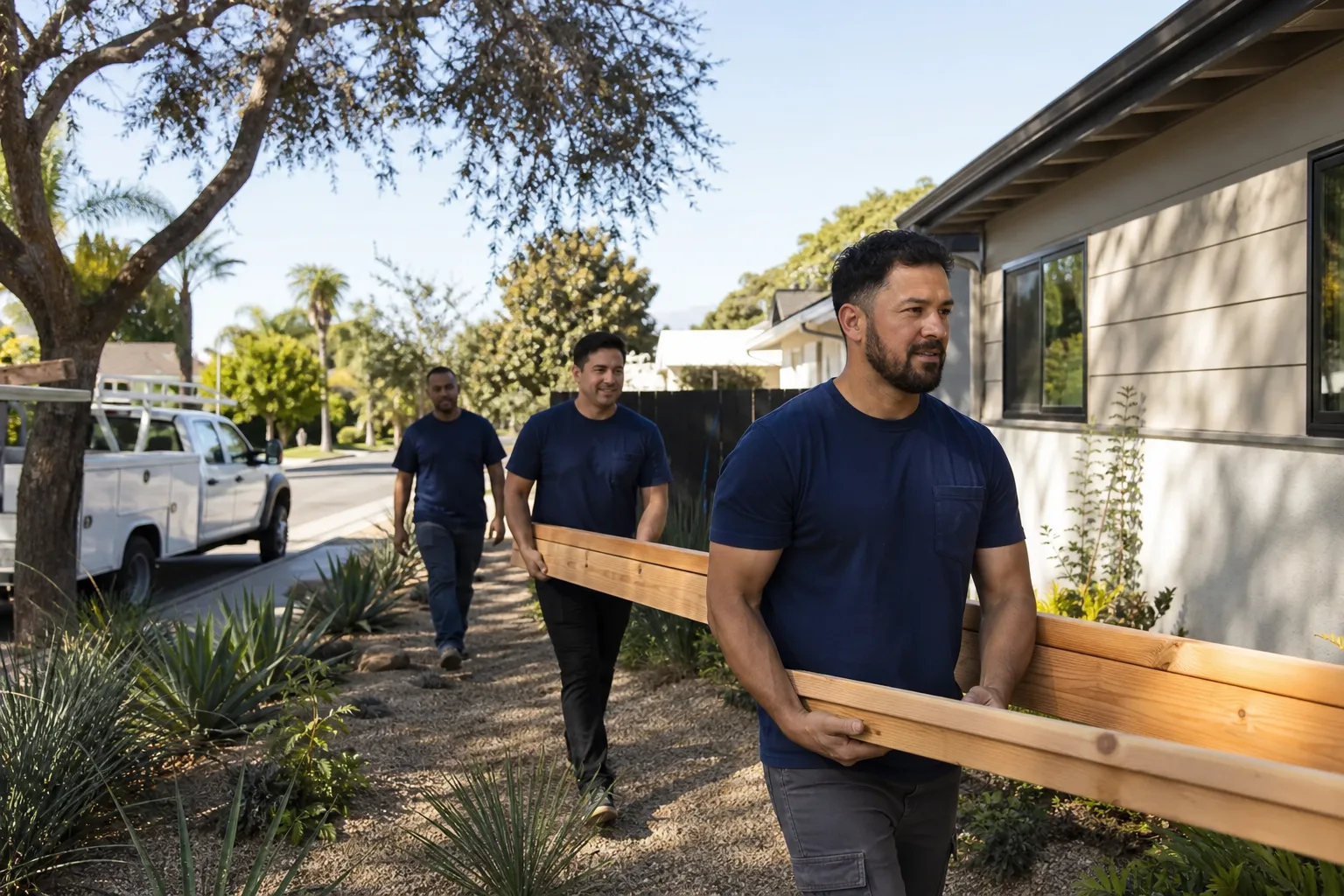
This is a trust and security issue, not just a logistics one. When our team at Sutton ADU Santa Clarita sends a technician to a project, the homeowner receives the technician’s name and photo before arrival, and the technician shows a photo ID badge at the door. That standard is written into every project we take on in Santa Clarita because opening your property to a construction crew is a real security decision. The owner-builder path removes that vetting layer entirely and replaces it with your own judgment, which is exactly what most homeowners are trying to avoid by considering a professional in the first place. This is what we mean when we talk about the Threshold Standard, a named system that governs how every person on your property is background-checked, identity-verified, and photo-badged. It’s a system, not a promise.
The Santa Clarita Decision Matrix: Four Homeowner Profiles
The DIY-vs-professional question isn’t a moral one. It’s a matching problem: what does this specific homeowner bring to the table? Here’s the honest read on four profiles we see repeatedly across Santa Clarita, from Newhall to Stevenson Ranch.
Profile 1: Skilled Trades Background
You spent years as an electrician, plumber, or framer. You know how buildings go together and you can spot a bad bid from across the room. For you, the owner-builder path is viable, but only if you also have the time and the temperament for project management. The ten-year liability disclosure still applies, and you should price the cost of liability into your decision. If you’re working a full-time job, even a trades background won’t save you, because ADU construction happens during business hours and someone has to be there to receive inspections. In our experience building ADUs in Santa Clarita, the trades-background owner who succeeds is usually semi-retired or working a flexible schedule.
Profile 2: Project Management Experience
You’ve run complex projects at work. You understand schedules, budgets, and contract language. This helps enormously, but it doesn’t replace construction-specific knowledge. You’ll still be at the mercy of subs who know more than you do about their own trade, and you’ll be signing a ten-year liability disclosure for work you can’t fully evaluate. Your best path is probably a hybrid: hire a professional ADU builder and stay deeply involved in the process. Our clients in Valencia who come from PM backgrounds are frequently the most satisfied because they ask the right questions and appreciate a written scope with a fixed price.
Profile 3: Time-Rich Retiree
You have the single most valuable resource in construction: availability. You can meet inspectors, receive deliveries, and keep an eye on the site. The owner-builder path is genuinely workable for you if you also have the patience to learn the permitting process and the willingness to manage conflict when a sub underperforms. But the security concern remains: you’re opening your property, often while home alone, to a rotating cast of unfamiliar workers. That’s not a minor inconvenience; it’s a legitimate safety decision. It may be worth paying a professional specifically for the vetted-crew standard that a reputable ADU builder provides.
Profile 4: Busy Dual-Income Household
The honest recommendation here is straightforward: hire a professional. A detached ADU build in Santa Clarita requires 15 to 25 separate inspections across six to twelve months. Those inspections happen during business hours on the city’s schedule, not yours. Missing them means rescheduling fees, extended timelines, and the builder’s holding costs passed along to you. A busy dual-income household simply cannot be present for the dozens of site visits an owner-builder project demands. The premium you pay a professional ADU builder buys back your time and transfers the liability. For this profile, that’s not a luxury; it’s the only workable option.
Santa Clarita-Specific Factors: Soils, Setbacks, and Seismic Rules
Every ADU in Santa Clarita is shaped by the same physical and regulatory realities, and those realities affect the DIY decision in ways that generic guides miss. Understanding them will help you evaluate any bid and decide where DIY risk actually lives.
Expansive soils. Much of Santa Clarita sits on clay-heavy soils that expand and contract with moisture. That movement places stress on foundations, and the City requires geotechnical evaluation for most detached ADU permits. A foundation designed without proper soil analysis can crack within a few years. This is one of the highest-risk areas for owner-builders because the fix, tearing out and repouring a slab, is a five-figure mistake. In Canyon Country and parts of Saugus, where soil movement is more pronounced, we’ve seen foundation failures on owner-built structures that a geotech report would have prevented.
Setbacks and lot coverage. Santa Clarita’s ADU ordinance follows state standards but adds local nuance: a setback (the required gap between your new structure and the property line) is generally four feet for side and rear yards on a detached ADU, but corner lots and hillside parcels in areas like Sand Canyon face additional constraints. On sloped lots, the setback is often measured differently, and the planning department may require a survey before the permit is issued. Owner-builders routinely miss these subtleties, and the correction is an expensive redesign after plans are already drawn.
Seismic requirements. Santa Clarita sits roughly ten miles from the San Gabriel Fault and within the shaking zone of the San Andreas. The California Building Code requires engineered shear walls, hold-downs, and specific anchorage details on all new residential structures. The structural engineering alone typically costs $3,000 to $8,000 for a detached ADU, and inspections on the seismic details are rigorous. This work is never DIY, and the owner-builder’s challenge is finding a framing crew who will execute the engineer’s details precisely, since the inspector will verify them. A professional ADU builder has crews who do this work repeatedly and pass inspection consistently.
The Prefab Middle Path: Factory-Built ADUs in Santa Clarita
There’s a third option that sits between pure DIY and full custom construction, and it’s increasingly common in Santa Clarita: factory-built ADUs. No matter which route you choose, ongoing maintenance matters-see our Seasonal ADU Care for Santa Clarita: Year-Round Homeowner’s Guide. These are delivered as complete modules or panelized kits from manufacturers like Boxabl, Plant Prefab, and others. In our experience working with these product lines, the prefab path removes much of the framing and finish risk from an ADU project while still requiring a licensed contractor for site work, foundation, utilities, and assembly.
The appeal is straightforward. A factory-built ADU arrives with walls, roofing, windows, and often interior finishes already installed. The manufacturer’s quality control handles the part of construction where owner-builders make the most expensive mistakes. What remains, the foundation, utility connections, and site assembly, is exactly the part you’d need a professional for anyway.
Price-wise, factory-built ADUs in Santa Clarita typically land between $150,000 and $280,000 depending on the unit and the site complexity. That’s generally below a fully custom build but above the optimistic numbers some manufacturers advertise, because the site work in Santa Clarita, grading, retaining walls, utility trenching, and seismic anchorage, is often more involved than the manufacturer’s calculator assumes. Homes in the hills around Sand Canyon and Placerita Canyon can see site costs alone exceed $50,000 on a challenging lot.
We also see Tuff Shed conversions brought up frequently by homeowners exploring the ultra-budget route. Here’s the honest counsel: a Tuff Shed is not an ADU and cannot be permitted as one in Santa Clarita without extensive modifications that usually cost more than starting with a proper foundation and framing. The building has no insulation, no seismic detailing, no electrical rough-in, and no plumbing. By the time you’ve brought it to code, you’ve spent ADU money on a structure that was never designed for occupancy. We tell Santa Clarita homeowners this directly because the Tuff Shed route looks like a $40,000 shortcut and becomes a $140,000 regret.
The prefab middle path works when homeowners pair it with a professional who handles the site. Sutton ADU Santa Clarita works regularly with homeowners considering Boxabl and Plant Prefab units, and our honest guidance is that prefab makes sense when the lot is relatively flat, access for crane or trailer delivery is workable, and the homeowner wants the certainty of a factory-built shell. If you’re exploring this path, a conversation about your specific lot before you buy is the cheapest insurance you’ll ever purchase. You can learn more about how we approach these projects on our ADU Builders in Santa Clarita page.
Insurance, Title, and Resale: The Risks That Outlast the Build
The DIY savings conversation usually stops at the construction costs. But the risks that matter most in California are the ones that surface months or years after the final inspection. Understanding these before you choose the owner-builder path is the difference between an informed decision and a costly surprise.
Homeowner’s Insurance Gaps During Construction
Your standard homeowner’s policy does not cover construction defects, and during an active build, many policies exclude or limit coverage for the portion of the property under construction. When a general contractor runs the project, their liability insurance and workers’ compensation coverage absorb the risks. When you’re the owner-builder, you are the contractor, and your personal exposure is direct. A worker injured on your site without proper coverage can bring a claim against you personally, and in California that claim can exceed your policy limits.
The Owner-Builder Resale Disclosure
California Civil Code requires you to disclose your owner-builder status to any buyer if you sell within ten years of completing the work. That disclosure goes into the seller’s transfer disclosure statement, and it changes the transaction. Lenders scrutinize owner-built structures more heavily, buyers negotiate harder, and some buyers simply walk away. In the Santa Clarita market, where ADUs have become a meaningful driver of home value, an owner-built ADU can paradoxically reduce your home’s value relative to an identical professionally built one, because the buyer inherits the residual liability question.
Permit and Title Complications
The City of Santa Clarita ties permits to the property, not to the person who pulled them. If the permit was pulled under the owner-builder provision and the work was never properly finaled, the open permit becomes a title defect that must be resolved before sale. Resolving an open ADU permit years after the build often requires bringing the work up to the current code, not the code that applied when the work was done. That retroactive correction can cost tens of thousands. A professional builder’s permit, with all inspections signed off and the final in hand, keeps the title clean.
The pattern we see in Santa Clarita is consistent: the homeowners who avoid these problems are the ones who treated the ADU as a legal and financial asset first and a construction project second. Whether you choose the owner-builder route or a professional, the decision should account for what happens after the building is done, not just what happens while it’s being built.
Sutton ADU Santa Clarita’s Approach to the Professional Path
If you’re reading this as a Santa Clarita homeowner considering an ADU, you’re likely weighing the owner-builder savings against the professional premium and trying to figure out whether that premium buys anything real. Here’s what we think it should buy, and what we’re built to deliver.
A written price before work begins. Every Sutton ADU Santa Clarita project starts with a written price delivered before any work starts. That’s a named standard in our company, not a sales tactic. No surprise invoices, no scope creep passed silently to the bill. The price you sign is the price you pay, and the 365-Day Done Right Promise covers defects in workmanship for one full calendar year from project completion. If the work isn’t right within that year, we make it right. That’s written into every project we take on in Santa Clarita.
Proof of who is on your property. The Threshold Standard means every technician who steps onto your Santa Clarita property is background-checked, identity-verified, uniformed, and photo-badged. Before arrival, you receive the technician’s name and photo. At the door, they show a photo ID badge. Every time, no exceptions. This matters because a construction crew working on your property for months isn’t a faceless abstraction, and you deserve to know exactly who is coming.
Fluent guidance on product decisions. We work regularly with factory-built ADU lines including Boxabl and Plant Prefab, as well as James Hardie exterior systems, and we’ll tell you honestly which product fits your lot and budget and which doesn’t. We’d rather talk you out of a bad product choice than build it and watch it fail.
If you’re still weighing the decision, the most useful next step is a conversation about your specific property. Our Sutton ADU Santa Clarita home page covers the range of projects we take on, and our Home Addition Contractor in Santa Clarita page explains how we handle larger scope work. If you’re considering whether an addition makes more sense than a detached unit, our Room Addition Contractor in Santa Clarita page walks through that comparison.
Common Mistakes to Avoid
- Signing the owner-builder disclosure without reading the liability language. You’re accepting ten years of personal defect liability. If you haven’t read the actual text, you’re making a legal commitment blind.
- Pulling the permit before checking your insurance. Many Santa Clarita homeowners discover their homeowner’s policy has construction exclusions only after a problem occurs. Call your insurer before you start, not after.
- Underestimating Santa Clarita’s soil conditions. Expansive clay soils in Canyon Country and Saugus require geotechnical work. Skimping on foundation engineering to save money is the single most expensive mistake an owner-builder can make.
- Hiring unlicensed subs to save money. In California, any work over $500 requires a licensed contractor. Hiring unlicensed labor exposes you to liability and voids any warranty you’d otherwise have.
- Treating prefab as a pure DIY shortcut. A factory-built ADU still needs permitted site work, a foundation, and utility connections. Buying the unit before understanding your site costs is a recipe for a stranded asset.
- Waiting to think about resale disclosure until you’re selling. The owner-builder disclosure follows you for ten years. If you might sell within that window, the disclosure cost should be in your DIY savings calculation from day one.
When to Call a Professional
Call a professional if you don’t have a construction trades background, if you can’t be present for multiple business-hours inspections, if your lot has soil or slope complications, or if the thought of managing unfamiliar subcontractors on your property makes you uneasy. Once your project is complete, protect it with our Home Addition Contractor Maintenance Checklist for Santa Clarita Homeowners. Call a professional if you might sell within ten years and don’t want the owner-builder disclosure complicating your sale. And call a professional if you want the liability on someone else’s insurance policy instead of your own. Sutton ADU Santa Clarita offers free estimates throughout Santa Clarita, including Valencia, Newhall, Canyon Country, Saugus, and Stevenson Ranch. Call (661) 430-0429 to schedule yours, and we’ll give you an honest read on whether a professional build, a prefab path, or an owner-builder approach fits your situation.
Frequently Asked Questions
A detached ADU in Santa Clarita typically costs $180,000 to $320,000 depending on size, site conditions, finishes, and whether you choose site-built or factory-built construction. Garage conversions run lower, often $120,000 to $180,000, while hillside lots with significant grading or retaining requirements can push past $350,000. Call (661) 430-0429 for a written estimate based on your specific property, no obligation.
Yes, California’s owner-builder provision allows you to act as your own contractor if you intend to occupy the property, but it requires you to sign a disclosure accepting ten years of personal liability for construction defects and to disclose your owner-builder status to any future buyer within that period. You can only perform work yourself that doesn’t require a licensed trade contractor; electrical, plumbing, structural, and HVAC work still requires licensed professionals.
It’s a legal acknowledgment you sign when pulling an owner-builder permit, confirming you understand that you are personally responsible for construction defects for ten years and that you’ll disclose your owner-builder status if you sell the property. Most homeowners sign it as part of the permit paperwork without reading the full legal implications, which include lender scrutiny on resale and personal exposure beyond your homeowner’s insurance coverage.
Yes, in measurable ways. The owner-builder disclosure must be included in your seller’s transfer disclosure statement for ten years, and it typically triggers additional lender scrutiny, buyer negotiation, or both. A professionally built ADU with clean permits and a contractor’s warranty generally supports a higher valuation than an identical owner-built structure with the disclosure attached.
Factory-built ADUs from manufacturers like Plant Prefab or Boxabl typically run $150,000 to $280,000 in Santa Clarita when site work, foundation, utilities, and assembly are included. That’s often slightly below a fully custom site-built ADU, but the savings depend heavily on your lot. Flat lots with easy access see real savings; sloped lots with retaining or trenching requirements can erase them entirely.
The most expensive recurring mistake we see is underestimating site preparation costs, particularly the foundation and grading work required by Santa Clarita’s expansive clay soils. Homeowners budget for the building and forget that the ground beneath it often needs $20,000 to $50,000 of engineering, excavation, and structural reinforcement before the first wall goes up. Get a site-specific estimate before committing to any path.
The Bottom Line
The DIY-versus-professional ADU decision in Santa Clarita isn’t really about money. It’s about liability, time, and who answers when something goes wrong. The owner-builder path saves a modest percentage on paper and costs you ten years of personal exposure, dozens of business-hours site visits, and the obligation to vet unfamiliar subcontractors on your own property. For a narrow slice of homeowners with trades backgrounds and open schedules, it’s a workable path. For everyone else, a professional ADU builder with a written price, a vetted crew, and a named warranty is the decision that holds up. The name Sutton comes from an old English term for a south farm, a settled place, and adding a second home to your lot in Santa Clarita is exactly that kind of rooted decision. Make it with your eyes open.
Written by Miles Hartwell, Owner at Sutton ADU Santa Clarita, serving Santa Clarita since 2006.